One Market
The seismic system of this historic landmark is brought into the 21st century.
Innovative Design
Our team responded to unique and challenging site conditions and limited construction access by designing a pair of large hollow concrete cantilever towers, supported by hybrid deep foundations and connected to the existing structure through a network of collectors.
Advanced Analytics
Our team validated the innovative design and confirmed the strength of the existing timber piles by creating localized analyses of various components of the building, and then using the results to calibrate the global model.
Integrated Value
Using concrete cores hidden within the building adds to the overall floor space, and allows for more flexible programming than conventional bracing would.
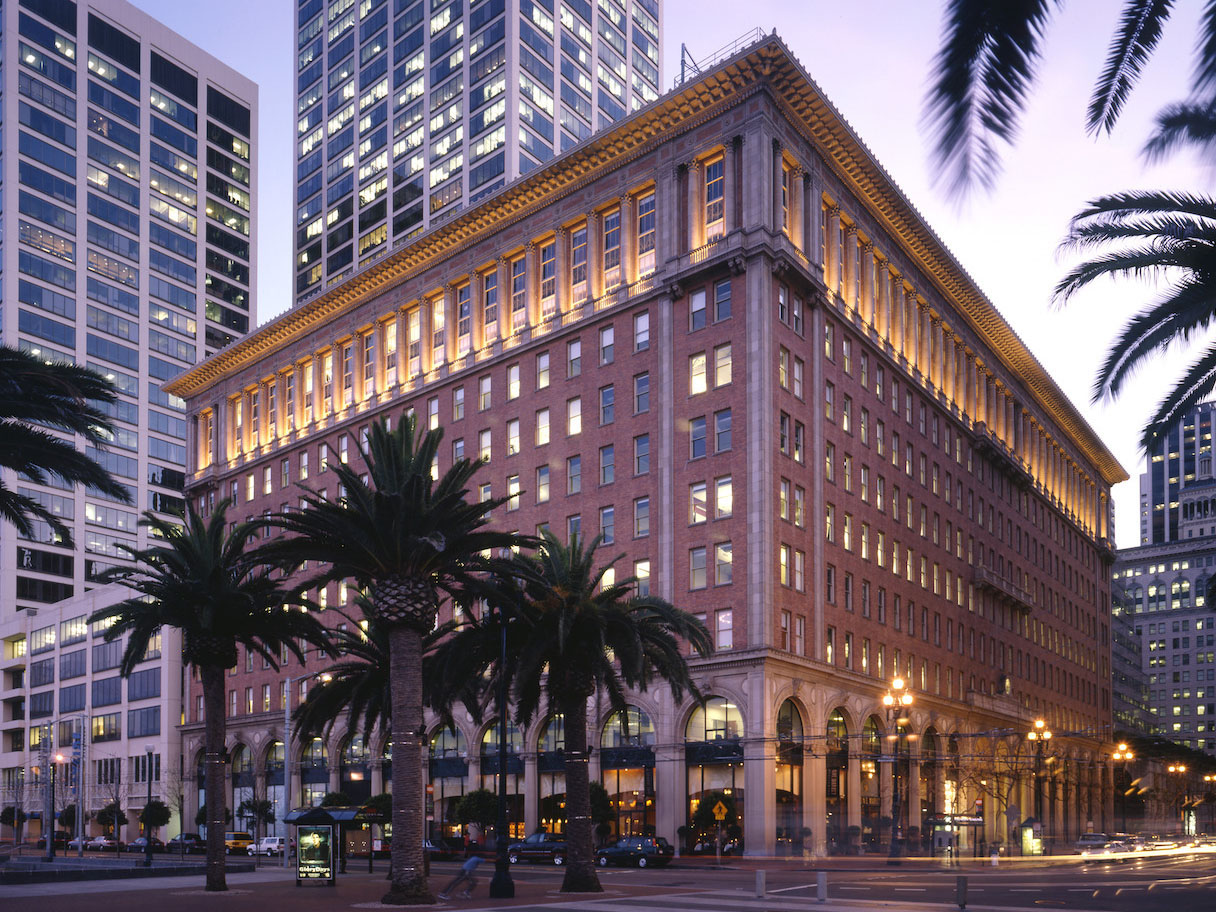
Originally constructed in 1917 as the headquarters of Southern Pacific Railroad Company, this 11-story building was brought up to modern standards while preserving its historic integrity. New ownership by TMG Partners was the perfect opportunity to upgrade to a Class A office space, and enhance seismic performance and safety.
Project challenges
Just across the Embarcadero from the San Francisco Bay, One Market sits on deep deposits of soft clay soils, requiring the Tipping team to closely collaborate with the geotechnical team, Subsurface Consultants. This busy waterfront location also meant that there was limited construction access, requiring creative collaboration with contractor Plant Construction.
The distinctive tall arched entryways and large glass panels on the ground floor created soft story/ weak story conditions in the steel-framed building, an issue which at the time of the retrofit had only just begun to be addressed in the wake of the Northridge earthquake in Los Angeles. Unreinforced brick masonry walls around the exterior of the building were another historic design feature requiring careful safety consideration, as they would be unable to flex with the movement of an earthquake.
-
Location
San Francisco, CA
-
Square Footage
428,000 sf
-
Cost
$50 million
-
Completion Date
2000
-
Owner
TMG Partners
-
Architect
McCluskey & Associates
-
Contractor
Plant Construction Company
-
Photography
TMG Partners, Tipping staff, historic archive
AWARDS
1999 SEAOC Excellence in Structural Engineering, Award of Excellence
1999 SEAONC Excellence in Structural Engineering, Award of Excellence
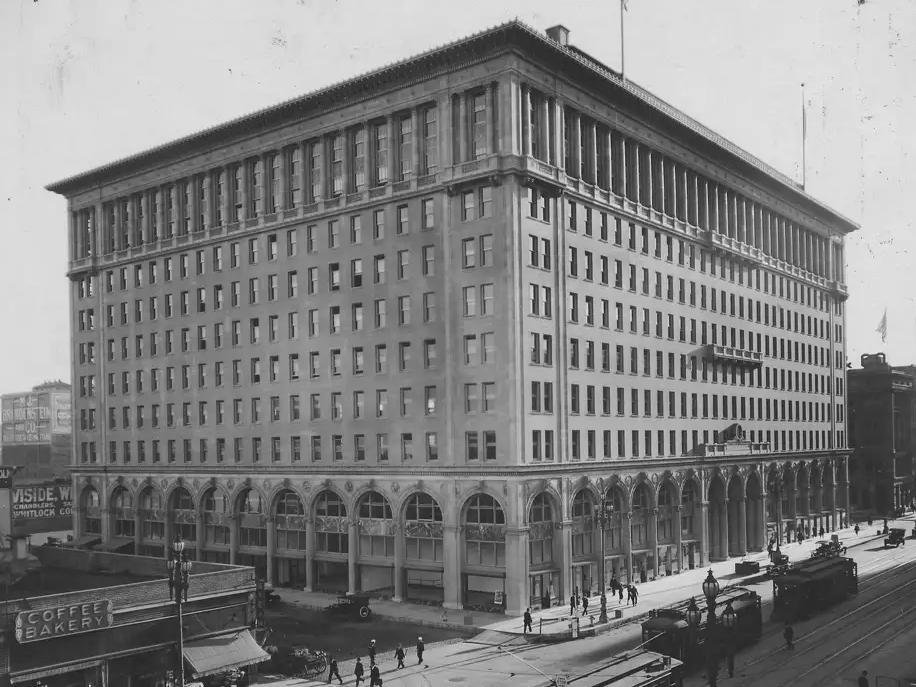
One Market in 1918, shortly after being built.
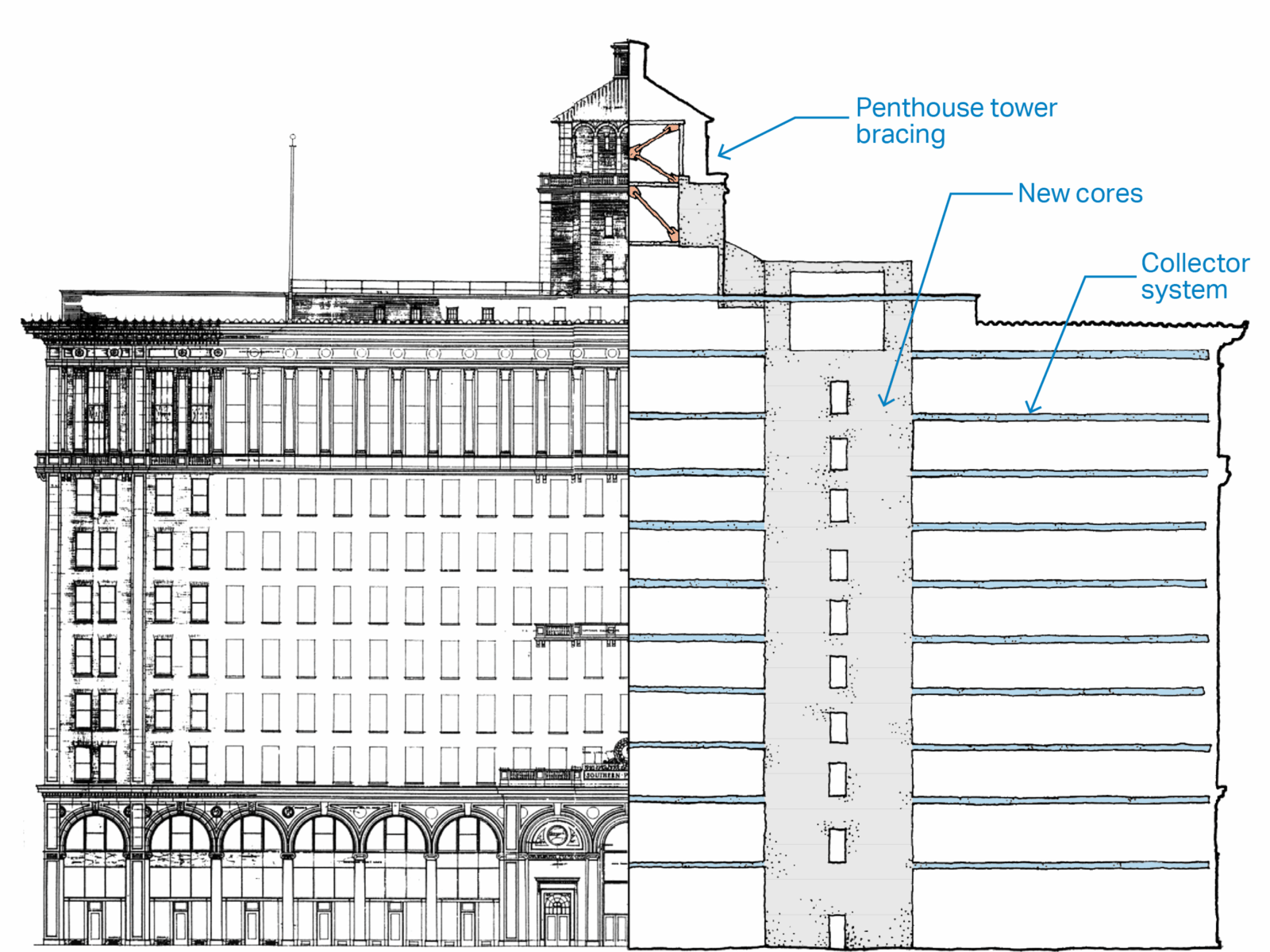
The new concrete hollow cores are connected to the new end shear walls on each of the eleven floors of the building via a network of collectors.
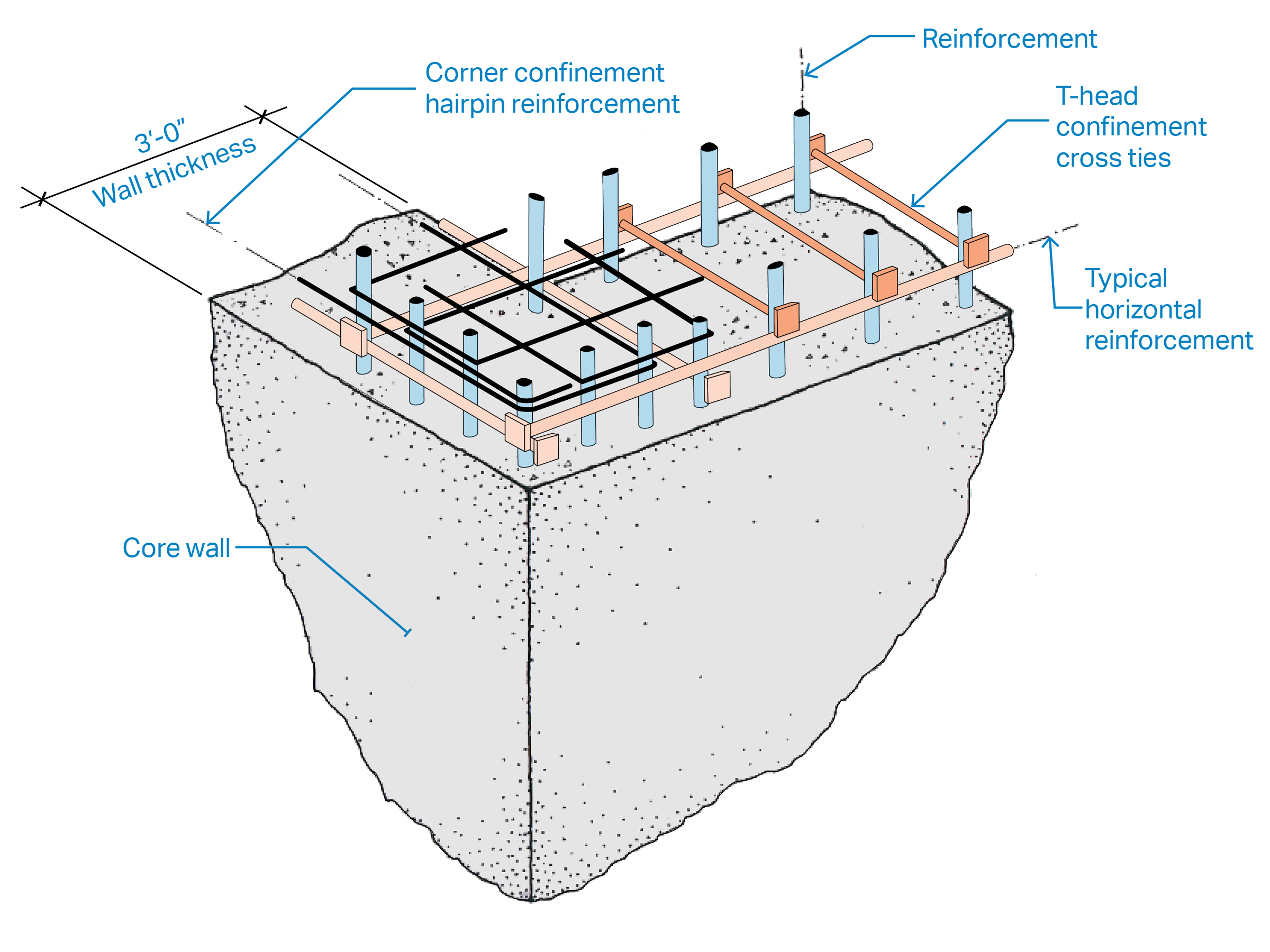
Detail of core reinforcement
Preserving history with an innovative retrofit
The eleven-story E-shaped building’s original structure consists of a vintage riveted steel frame with in-fill masonry façade walls, on a foundation of timbers driven into the deep deposits of Bay mud. This historic design provided little in the way of lateral bracing, making seismic retrofitting an essential component of the renovation.
The design team developed a targeted retrofit scheme that increased usable square footage, avoided exposed bracing, and accommodated the new mechanical systems. Two 33-ft-square, 150-ft-tall, hollow concrete cantilever towers were added into existing light wells, constructed completely within the interior spaces of the structure. Two new solid concrete shear walls stabilize the dynamic response and minimize damage to the structure and historic masonry cladding.
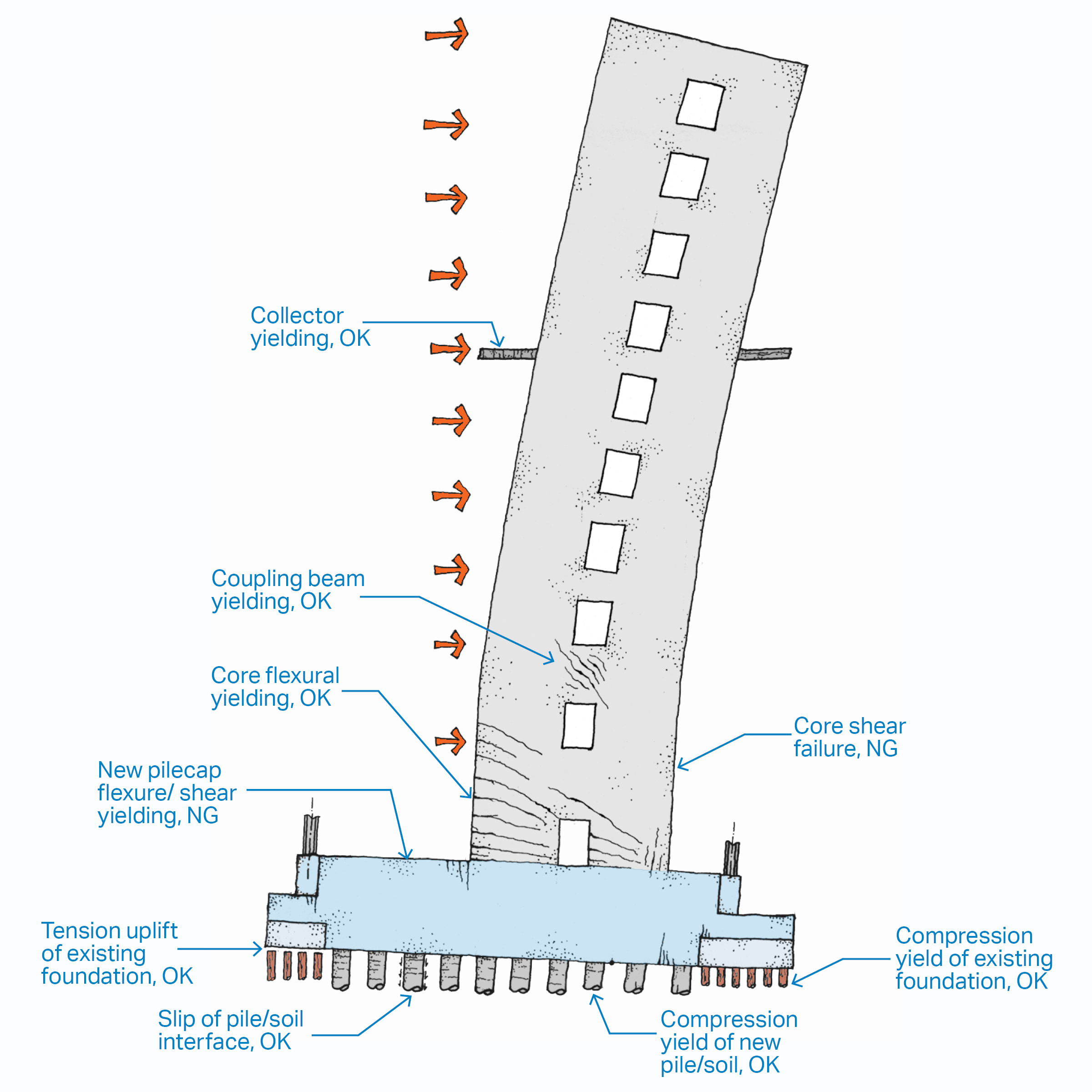
Prioritizing ductility as a performance objective
The seismic retrofit goal was to achieve a system where earthquake damage occurs in predefined locations that are designed to tolerate them, requiring that the system predictably dissipate energy during a major earthquake. Extensive analyses were performed to accurately predict the structure’s responses to seismic activity, including 3D modeling of the concrete towers, and non-linear studies of the way the soil and the foundation interacted. Each of these highly specific advanced analyses of the building’s materials and components were then integrated into the global model.
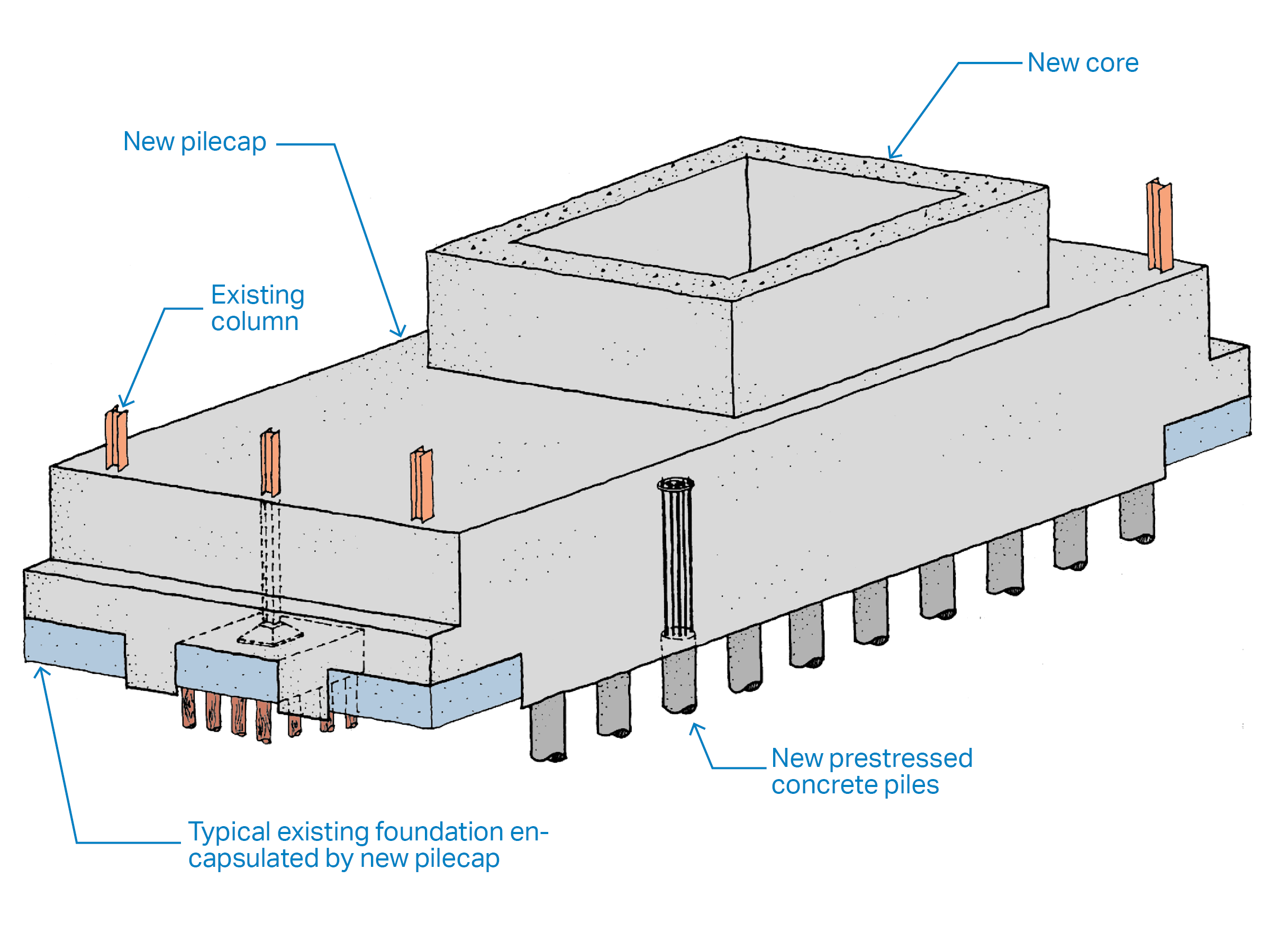
Foundation scheme
Overcoming geological challenges
The geotechnical report indicated that the soft, clayey soils under the building reached about 250 feet down, placing load-bearing strata out of practical reach. Working with the geotechnical team, the Tipping team modeled various foundation systems before deciding on prestressed Cast-in-Drilled-Hole (CIDH) pile foundations that extend 150 feet into the clay – a depth equaling the height of the building. The building’s existing timber piles were designed to resist seismic loads entirely through friction, and the new seismic system expanded on and modernized that approach.
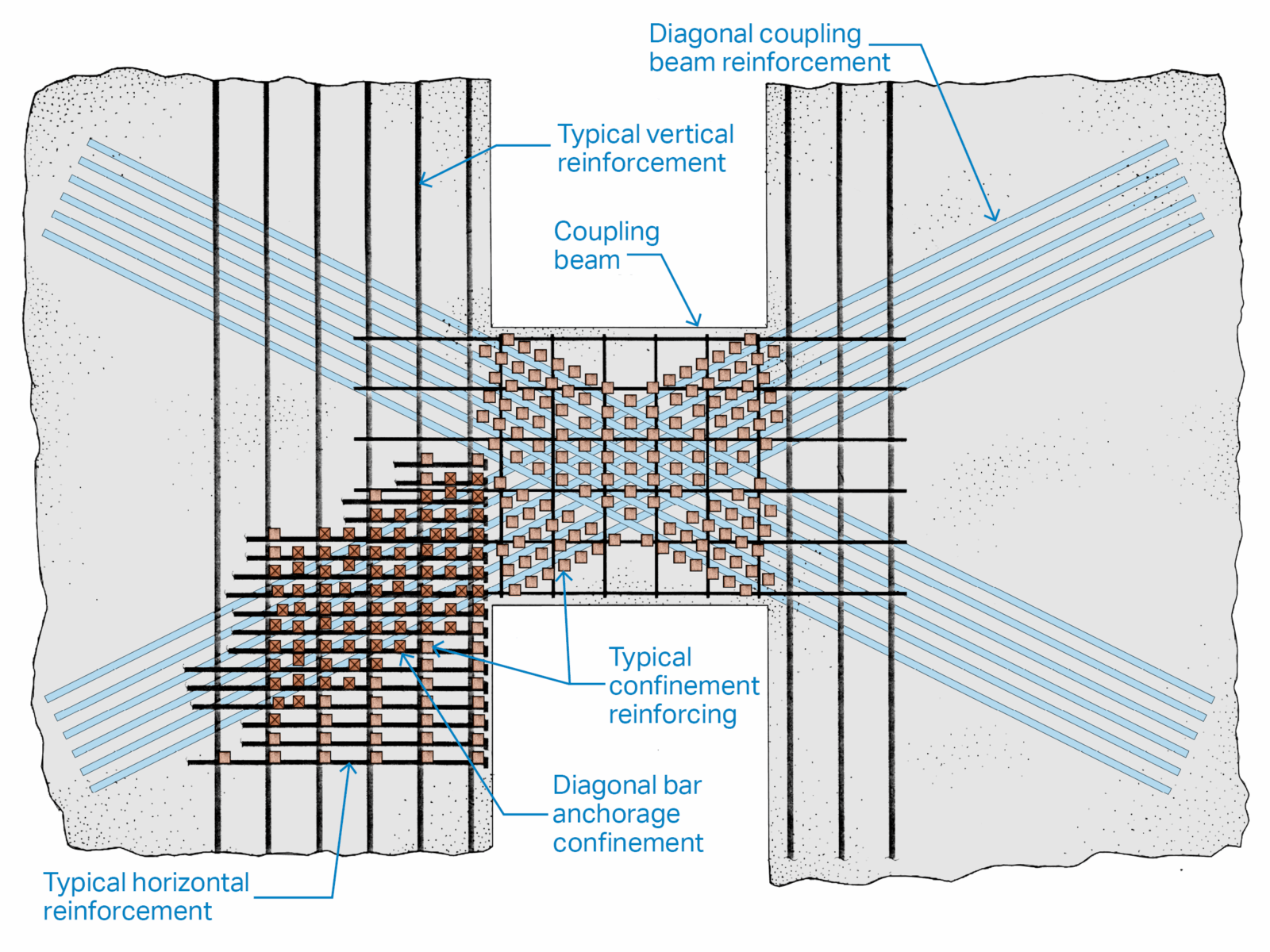
Coupling beam reinforcement diagram
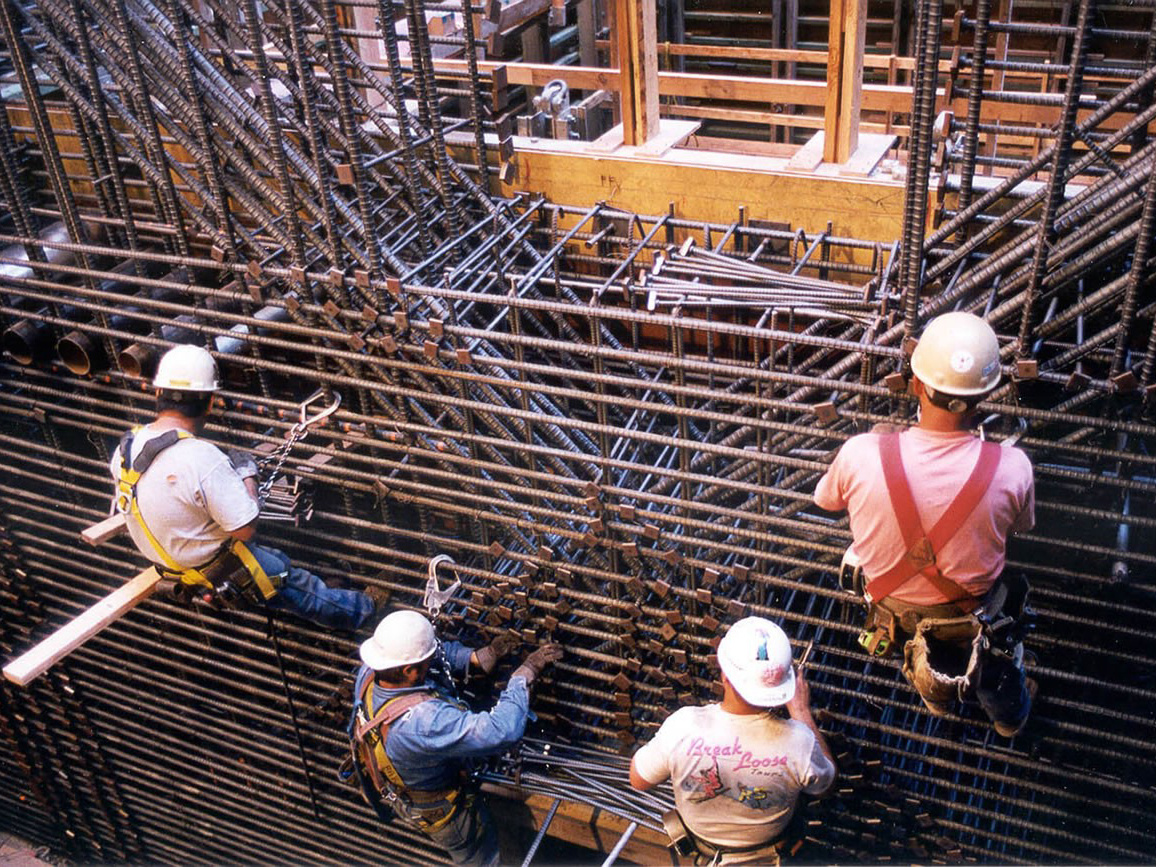
Workers bringing the innovative solution to life