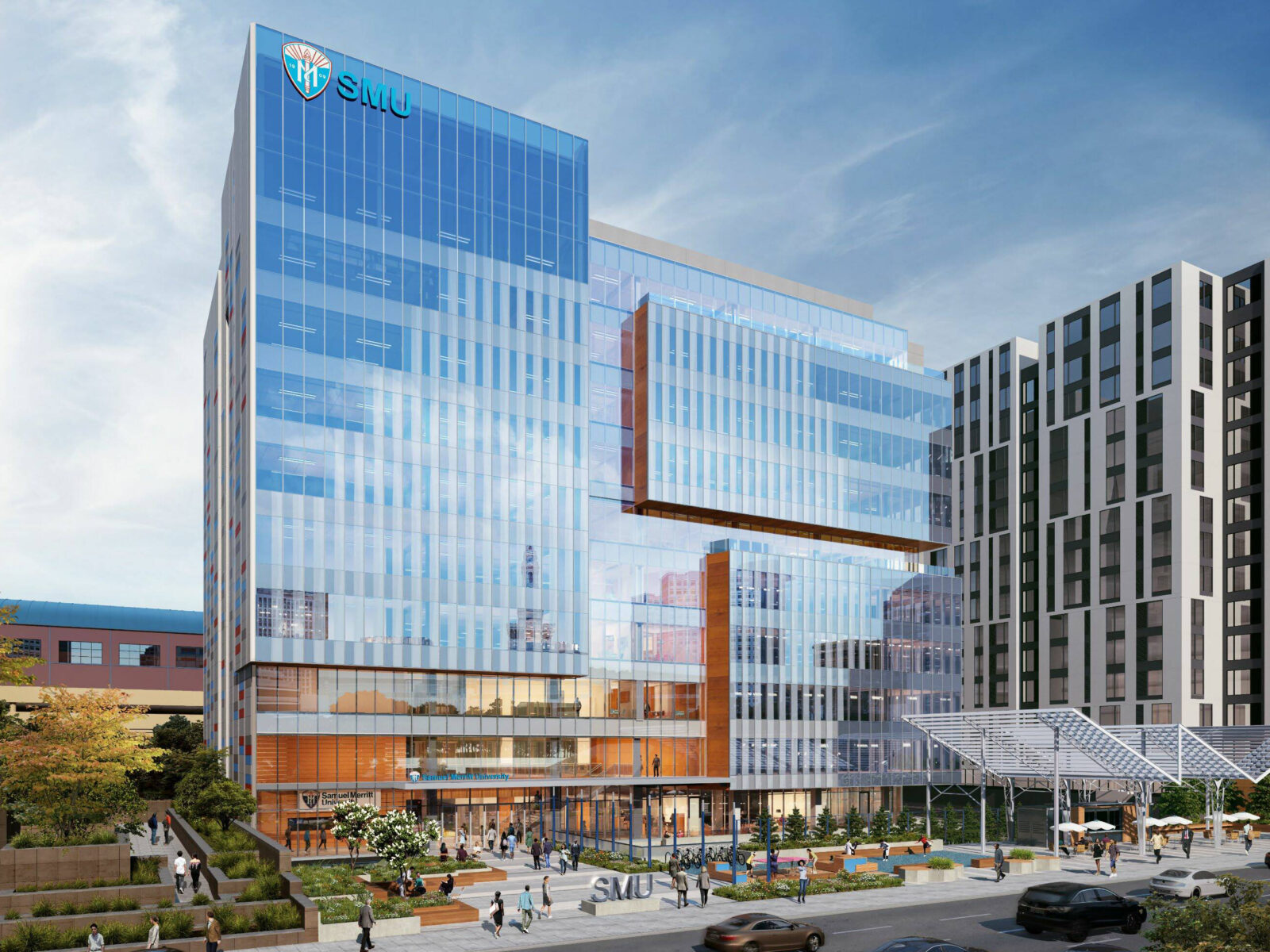
Samuel Merritt University Oakland City Center
An innovative seismic design supports SMU's new flagship campus tower, expanding the future of healthcare education in the Bay Area.
Advanced Analytics
Nonlinear static and dynamic analyses validated the BRB Mast frame system’s capacity to meet stringent safety, serviceability, and resilience requirements.
Innovative Design
By combining a vertical mast truss with Buckling Restrained Braces, the system reduces story drift, prevents localized damage, and boosts reliability in an earthquake.
Seismic Resilience
The uniform drift profile with no concentration of story deformations validated through analysis, is a significant performance improvement over conventional practice.
Integrated Value
The BRB Mast system's inherent redundancy allows for fewer frames in the building, minimizing the impact to interior spaces while capturing overall cost savings.
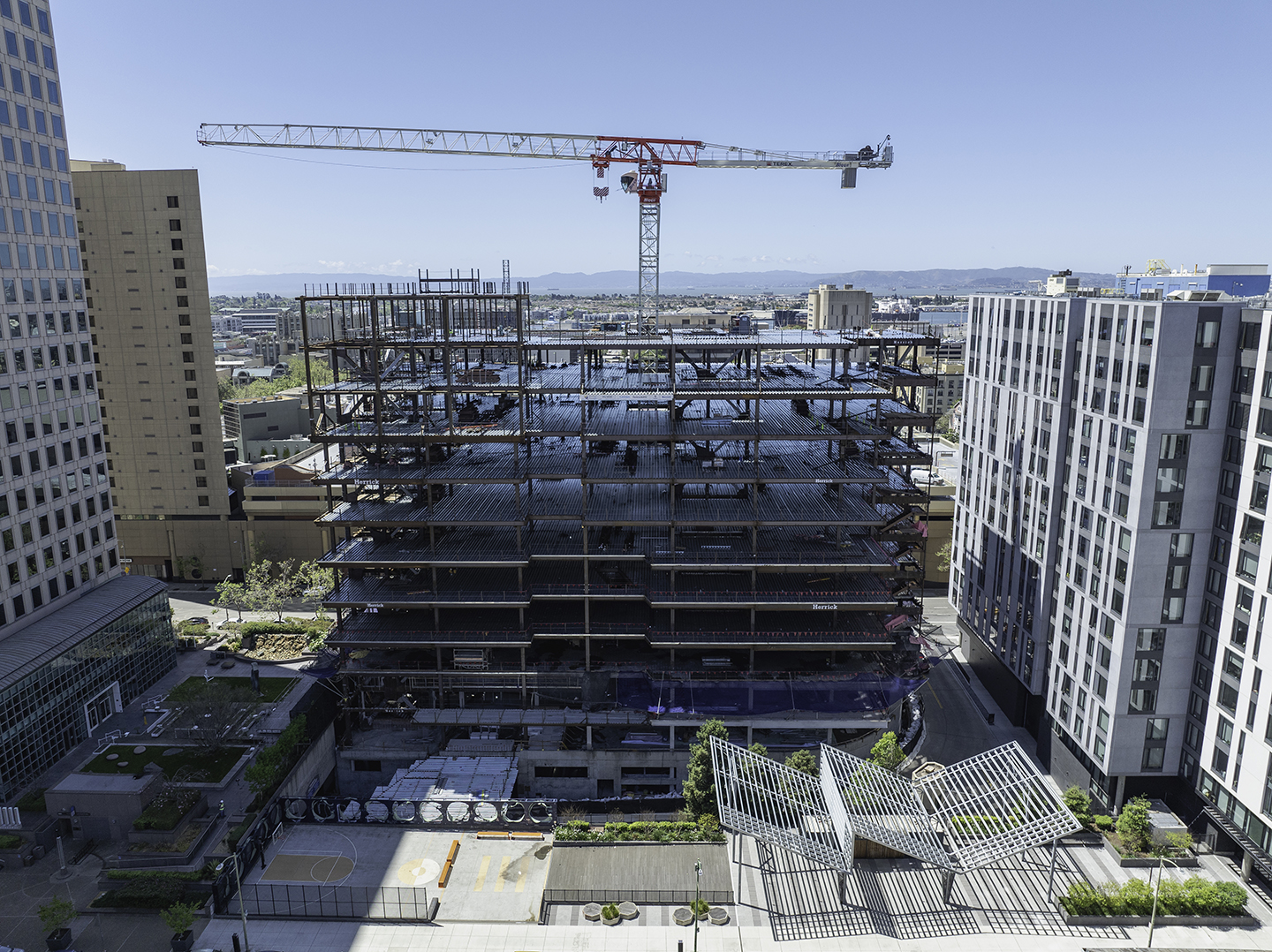
This new high-rise building will serve as the flagship campus for Samuel Merritt University (SMU), a leader in health science education. The new 10-story, 250,000-square-foot campus allows the more than century-old organization to double its enrollment and directly address the Bay Area’s critical shortage of healthcare workers. Slated to open in 2026, the campus headquarters will feature classrooms, laboratories, clinics, offices, a makerspace, and a 41,000-square-foot simulated lab.
SMU's commitment to its Oakland roots
Located in the Oakland City Center, the development reaffirms SMU’s deep commitment to its roots in Oakland. A new Center for Community Engagement and a publicly accessible plaza, which will feature community programming, and a new café will invite foot traffic and commercial activity to the area.
Identifying an ideal structural system
Working closely with the developer, contractor, and architect, the Tipping team investigated different design strategies, including moment frames, dual systems, conventional Buckling Restrained Braced (BRB) frames, and BRB Mast frames to develop the most effective approach. This allowed the team to make detailed comparisons of architectural impact, material use, seismic performance, and construction cost to arrive at the preferred solution.
-
Location
Oakland, CA
-
Square Footage
259,000
-
Cost
$133M
-
Completion Date
2025
-
Owner
Samuel Merritt University
-
Architect
Perkins&Will
-
Contractor
Hathaway-Dinwiddie Construction Company; Steel Fabricator: The Herrick Corporation
-
Developer
Strada Investment Group
-
Photography
Perkins&Will (rendering); Remote Optix (construction)
AWARDS
LEED Silver targeted
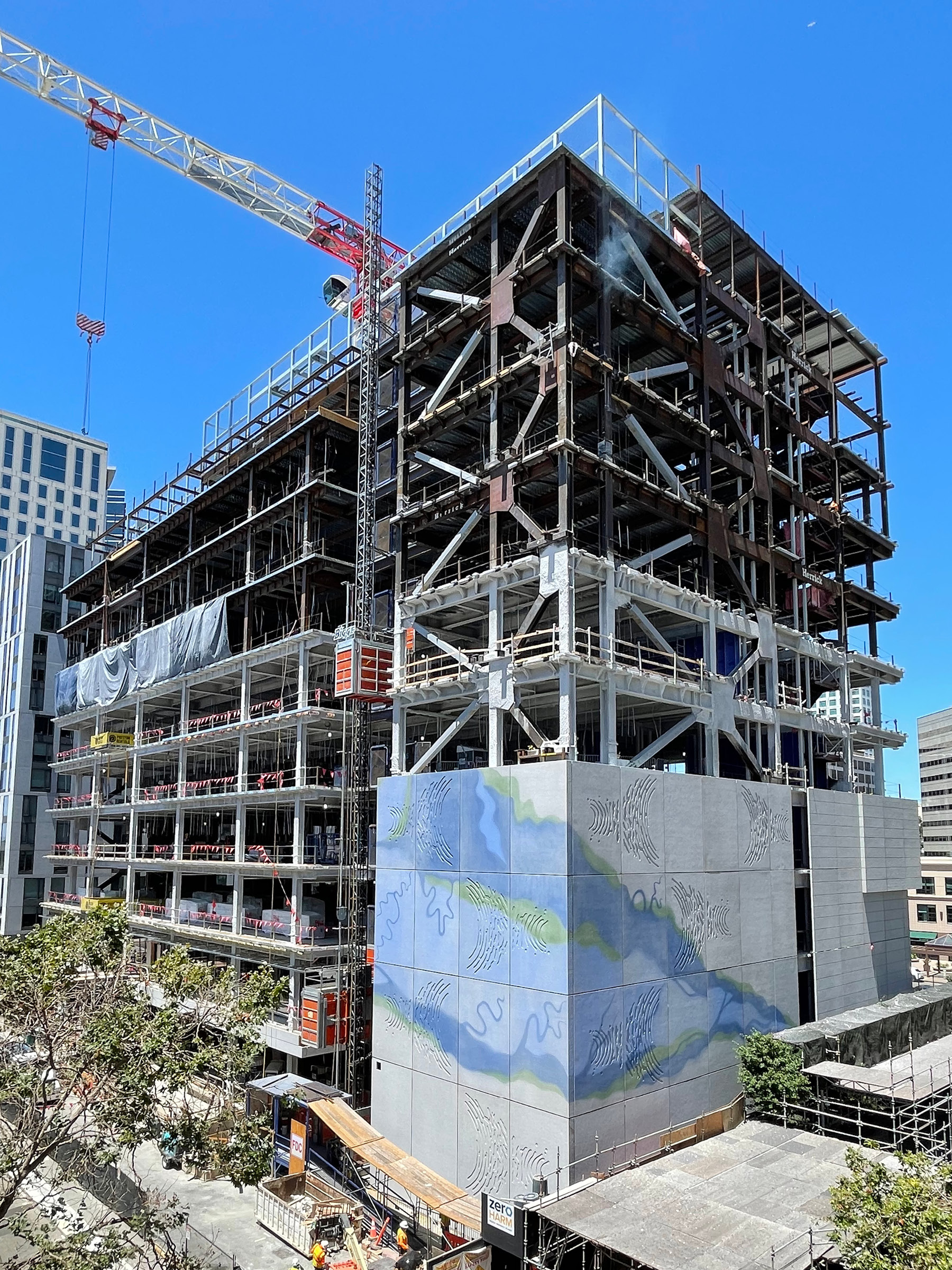
A 10-story Buckling Restrained Braced Mast Frame
An iterative design approach resulted in a novel and cost-effective structural system that provides an unobstructed floor plan and superior seismic performance, including an offset vertical circulation core that allows for large unobstructed classrooms and flexibility for lab planning.
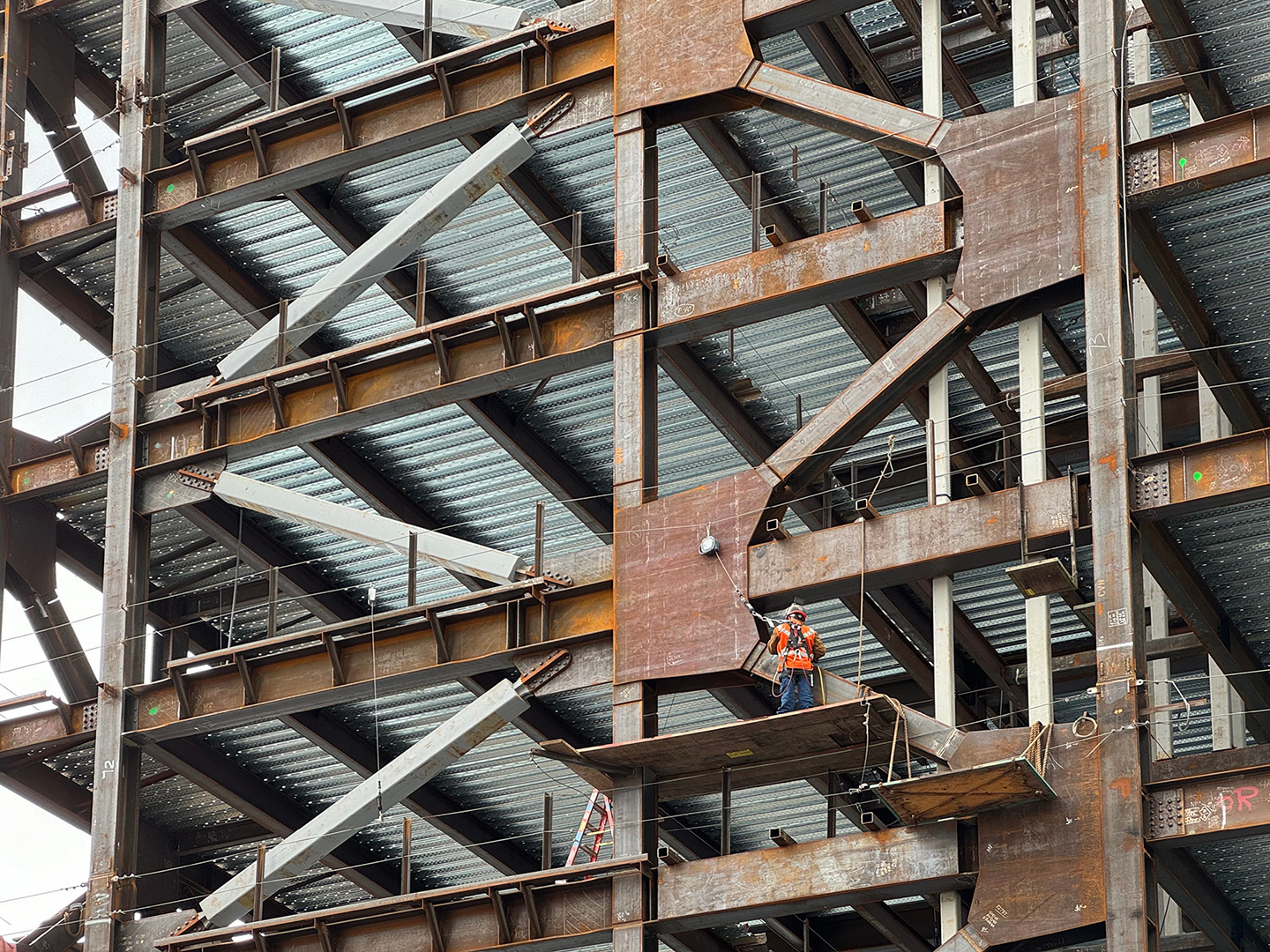
The structural system is a variation of the conventional BRB frame, which incorporates a vertical mast or strongback element. This configuration, referred to as a Buckling Restrained Braced Mast (BRB) Mast frame, effectively separates the elastic and energy dissipating components of the system resulting in a more resilient and reliable structure. The mast element consists of a vertical truss that is designed to stay elastic and work in conjunction with BRB devices, which yield and dissipate seismic energy.
Learn more about BRB Mast Frames.
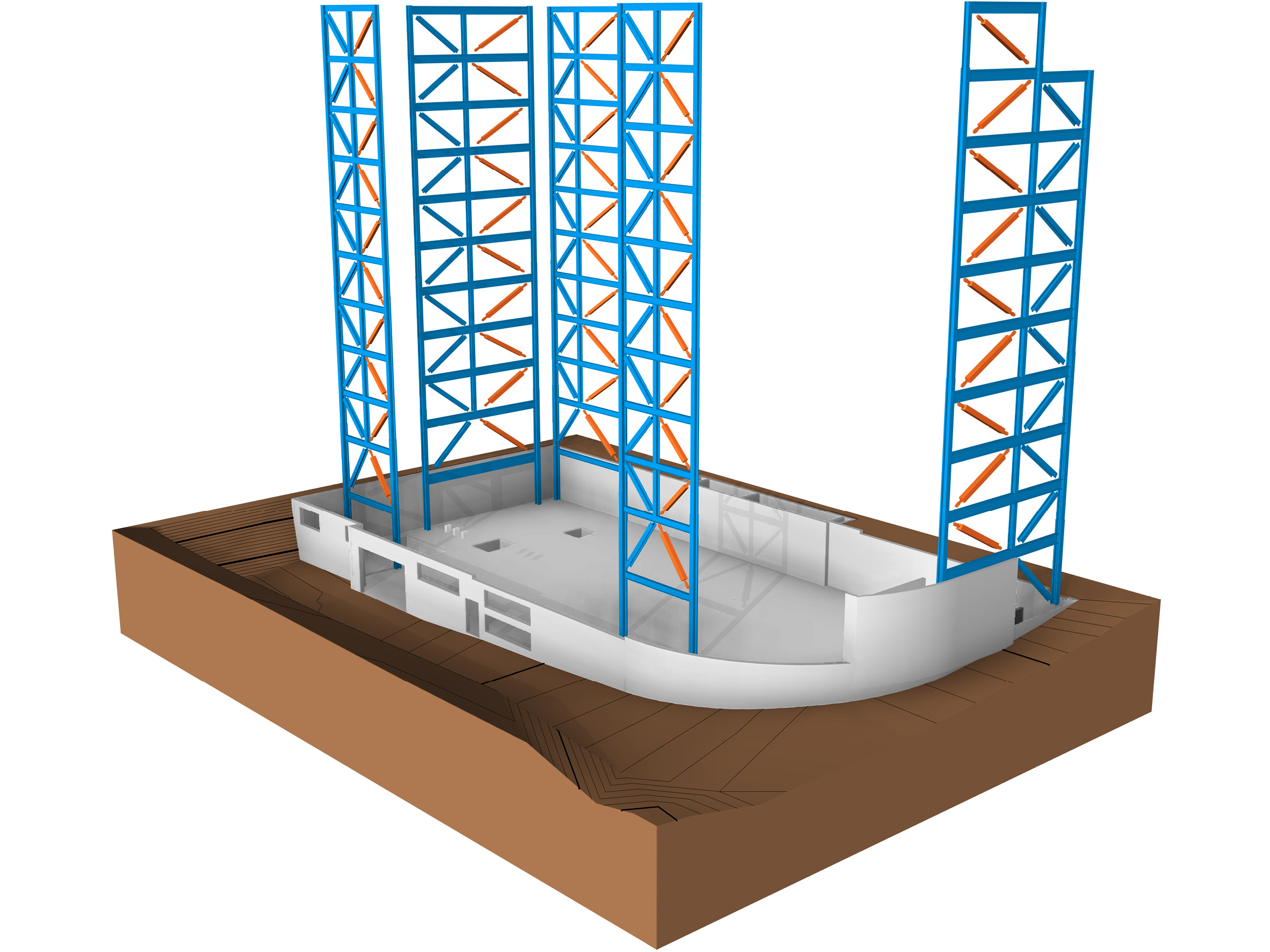
Hybrid structural system offers efficiency and cost savings
Key advantages of the BRB Mast system include its ability to maintain an open floor plan and maximize façade transparency, while significantly improving seismic performance. The compact footprint of the BRB Mast frames allow them to be largely concealed within permanent demising walls. Their inherent redundancy allows for fewer frames in the building and significantly reduces the number of BRB devices, both minimizing the impact to interior spaces and resulting in overall cost savings.
The BRB Mast system has been used on other projects including the Exelixis Life Sciences Headquarters and 740 Heinz Laboratories.
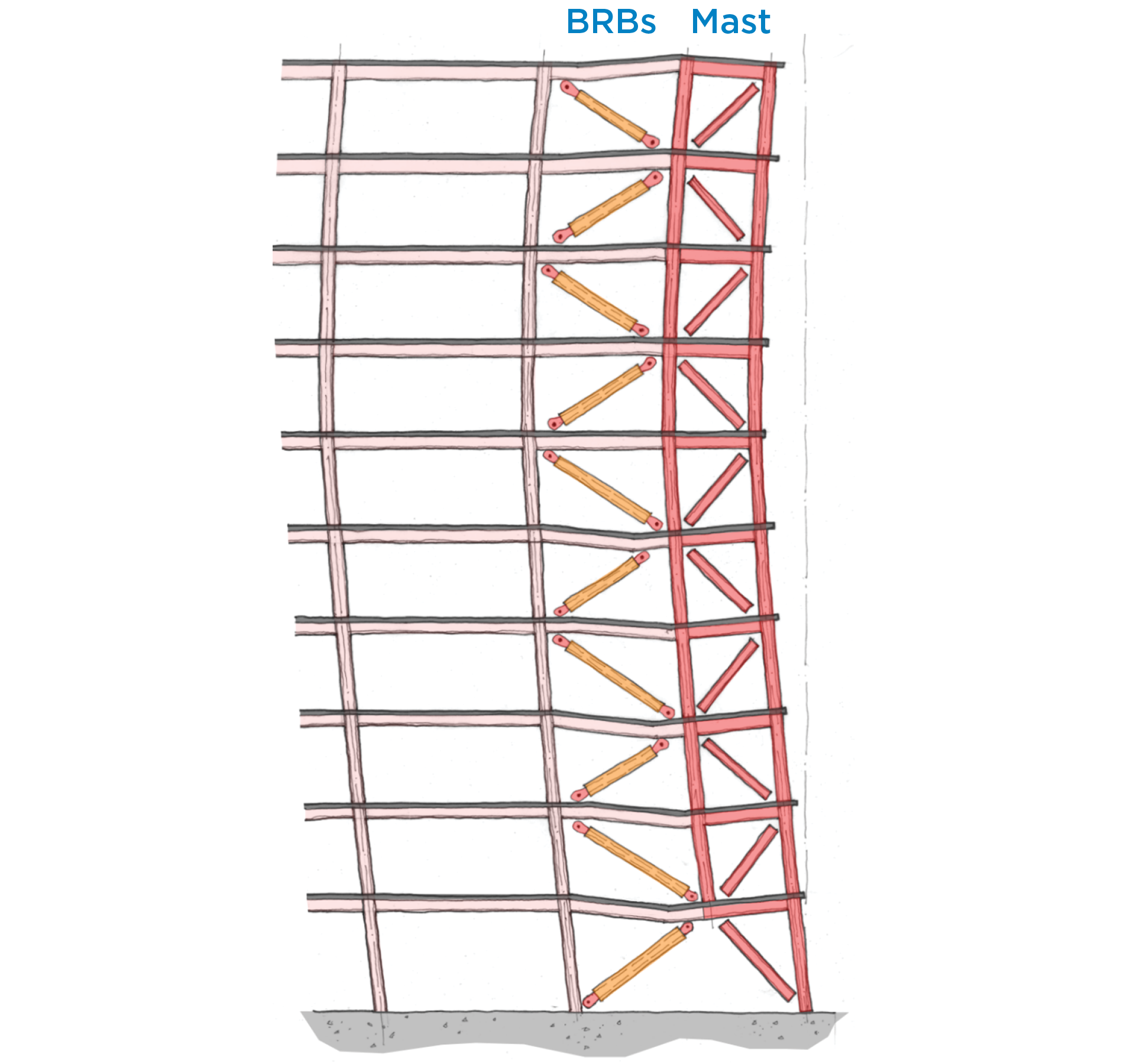
Optimization through advanced analytics
By interconnecting all of the BRB Mast devices throughout the height of each frame, they are fully utilized and capable of sharing loads between stories. The rigidity and strength of the mast significantly reduces the maximum expected seismic drift and ensures a more uniform drift distribution throughout the height of the building. This effectively eliminates story mechanisms and localization of damage, resulting in a more resilient and reliable structure. To validate the design, we deployed nonlinear analyses to capture the inelastic response of the system and refine the design of the mast members and BRBs.
Learn more about Advanced Analytics.
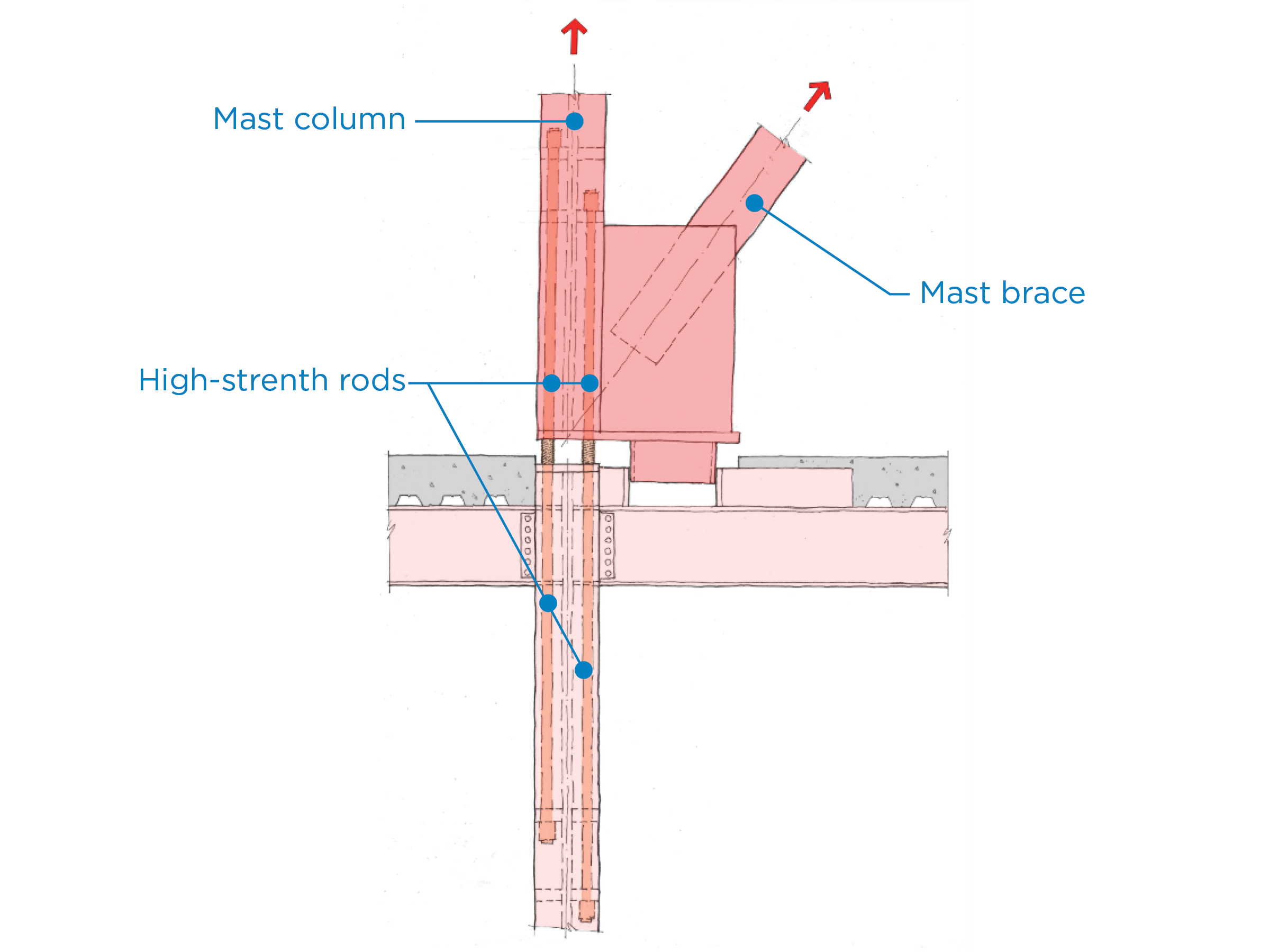
Mast frame base
To allow the mast frames to rock and pivot more freely about its base and prevent overstressing the gravity support columns, the team developed an improvised pin connection that could resist large shear and overturning axial forces while allowing rotation. The detail relied on direct steel-to-steel contact at the base connections to deliver axial compression and shear. To transfer tension forces, Tipping called for long high-strength rods to anchor the base of the mast.
The design was submitted for plan review and approved through a conventional permitting process, which did not require a special Alternate Materials and Methods Request or formal peer review.
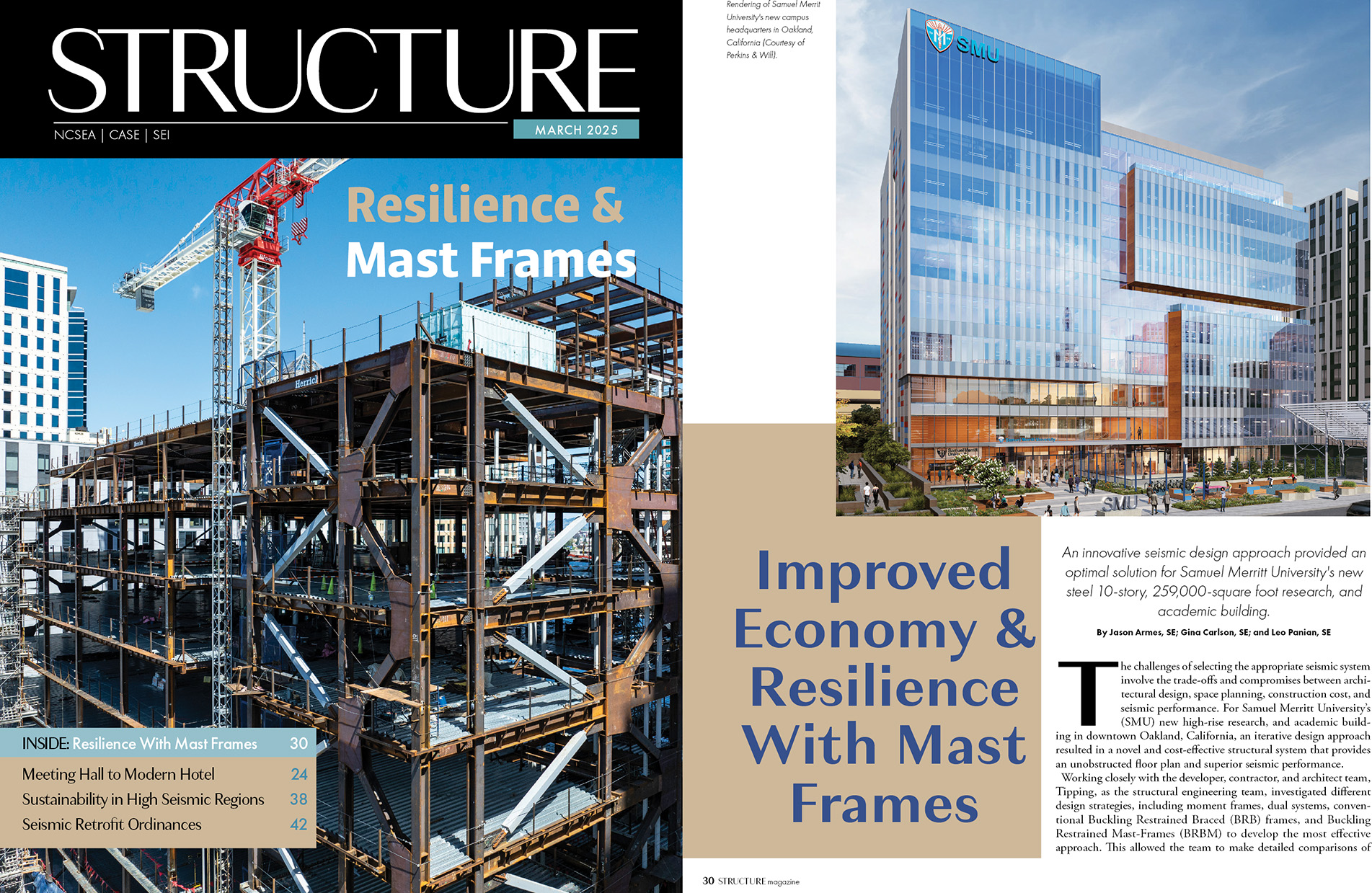
STRUCTURE Magazine features SMU’s Oakland City Center
An article titled “Improved Economy & Resilience With Mast Frames” explores in depth how the SMU Oakland City Center project not only sets a precedent for the future of steel seismic design, but also highlights the potential of collaborative engineering to drive innovation. The article is co-authored by Tipping’s Jason Armes, SE, Gina Carlson, SE, and Leo Panian, SE.
Read the article in Structure.