Storehouse Lofts
A WWII-era military warehouse is transformed into a residential building with 198 live-work lofts and two restaurants.
Advanced Analytics
We invested in deep analytical understanding to reveal what the existing structure was already capable of, and where targeted intervention would yield the greatest return.
Innovative Design
We added rentable square footage rather than consuming it by converting a legacy concrete core into new loft units, while activating it as the primary seismic force-resisting element.
Integrated Value
We helped the team avoid significant potential cost by developing a "green zone" coring strategy that identified non-critical reinforcing areas, where regular utility penetrations could be made without slab strengthening.
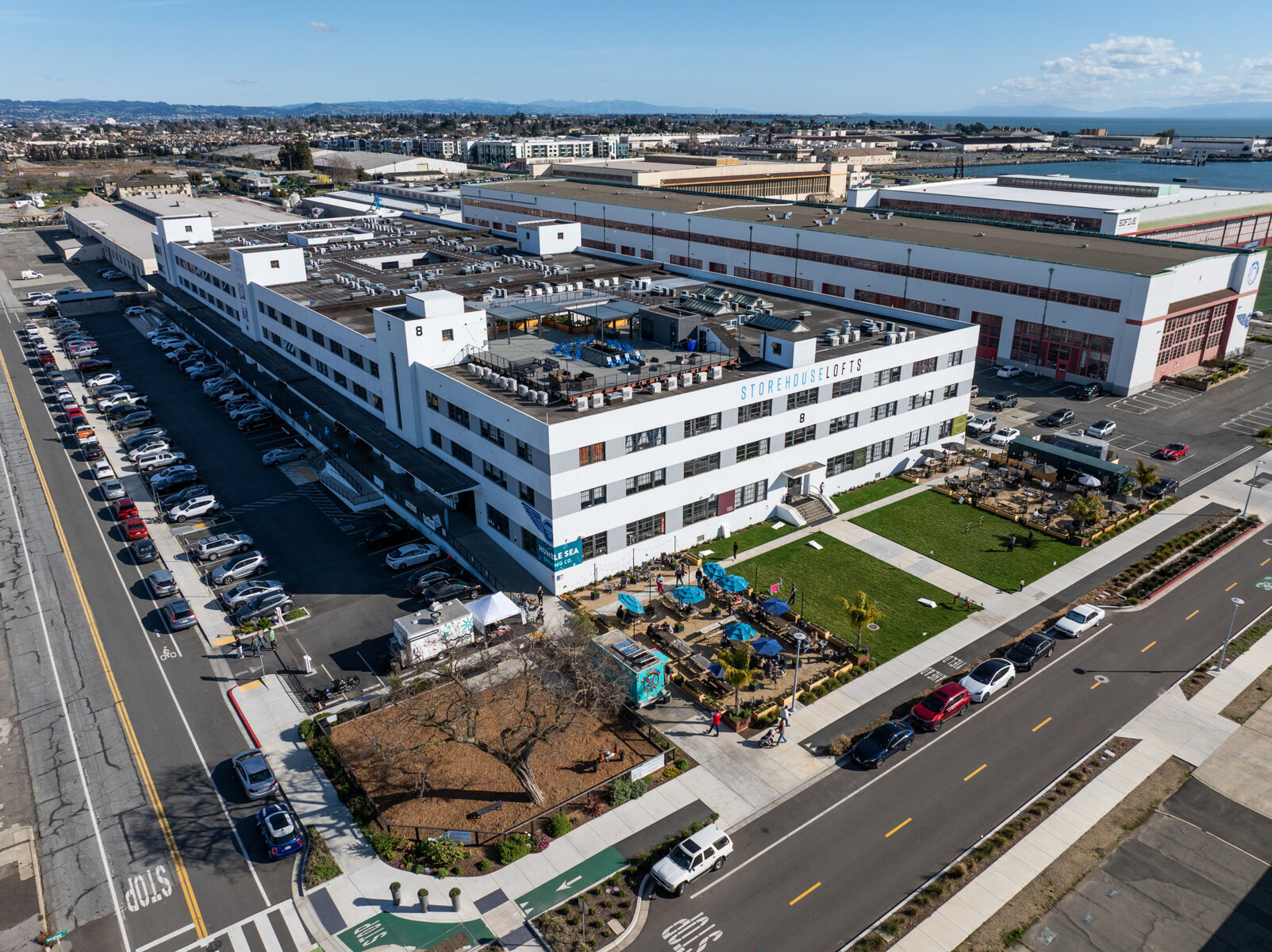
Naval Air Station Alameda Historic District Building 8, also known as the General Storehouse, was used for heavy material storage until the air station closed in the late 1990s. Twenty-five years later, the mixed-use facility now contributes to the revitalization of Alameda Point by housing hundreds of new tenants and demonstrating the potential of other underused and historically significant buildings in the area.
Harnessing the unique attributes of the WWII-era structure
The original three-story reinforced concrete building spans 500 feet by 180 feet, comprised of three independent structures, separated by 2-inch joints. As a former military facility, detailed original drawings and reports were readily available to the design team. These drawings contain extensive information about the structural elements—concrete reinforcing, pile configurations, and more—exceeding the documentation typical of buildings constructed 85 years ago, when structural designs were commonly recorded with only a handful of plan sheets and typical sections.
The Tipping team took these details and developed a detailed nonlinear analysis model to identify critical seismic deficiencies and optimize structural retrofit measures that minimized interventions, while unlocking the historic building’s latent capacity.
-
Location
Alameda, CA
-
Square Footage
254,000 sf
-
Cost
Confidential
-
Completion Date
2024
-
Architect
Wong Logan Architects
-
Developer
Alameda Point Redevelopers
-
Photography
Maurice Ramiez; Wong Logan Architects
AWARDS
2026 ASCE San Francisco Section Awards – Outstanding Structural Engineering Project
2026 ASCE Golden Gate Branch Awards – Outstanding Structural Engineering Project
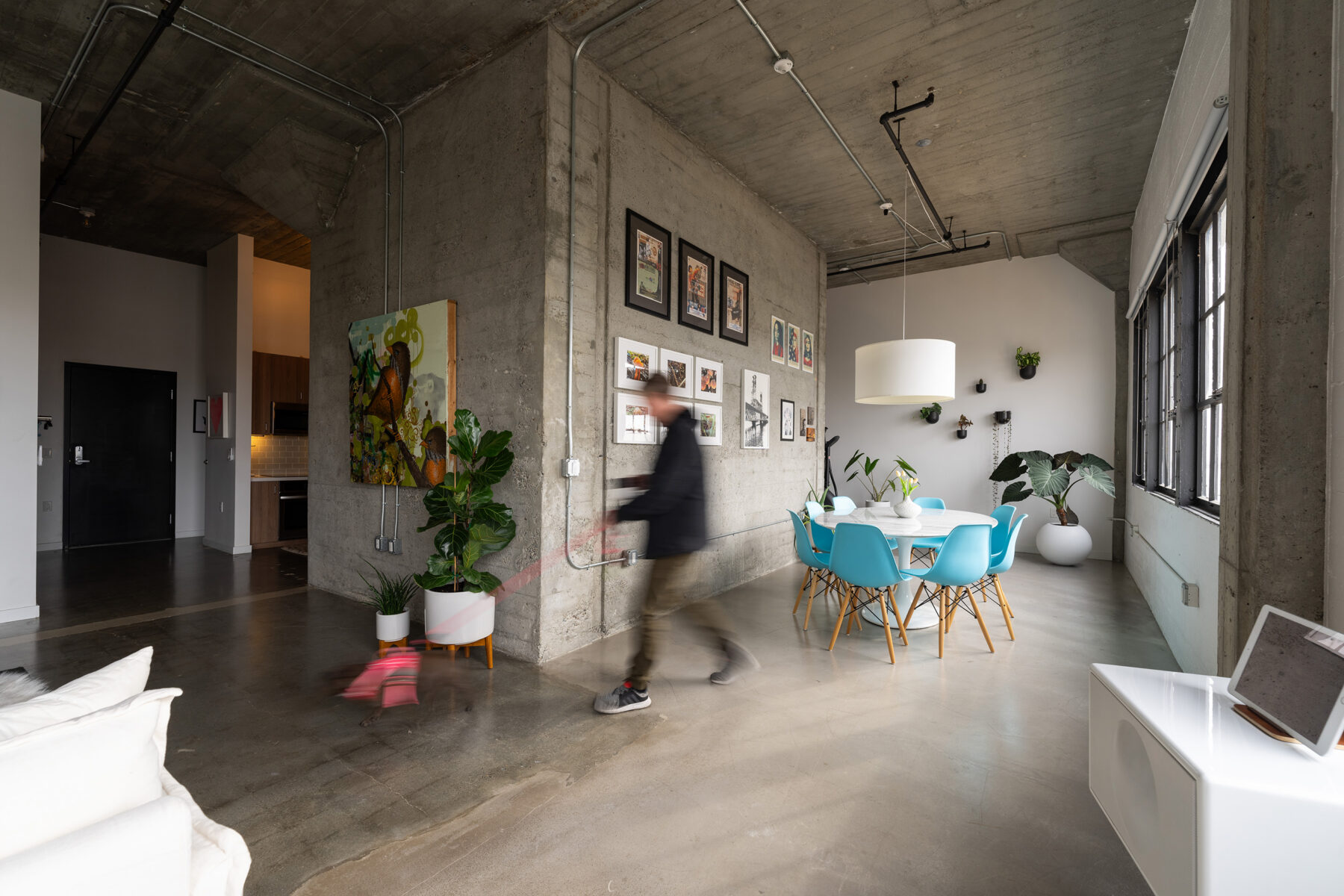
198 live-work lofts and two restaurant spaces bring a new sense of community to this long-neglected building, enlivening the neighborhood.
Alameda Building 8 exemplifies structural engineering excellence through its integration of rigorous analysis, creative problem-solving thereby creating a meaningful social impact. Instead of applying standard prescriptive retrofit methods to a nonstandard building, the team invested in deep analytical understanding...to reveal what the structure could already do and where targeted intervention would yield the greatest return.
- ASCE Golden Gate Branch Awards Jury, Outstanding Structural Engineering Project Award
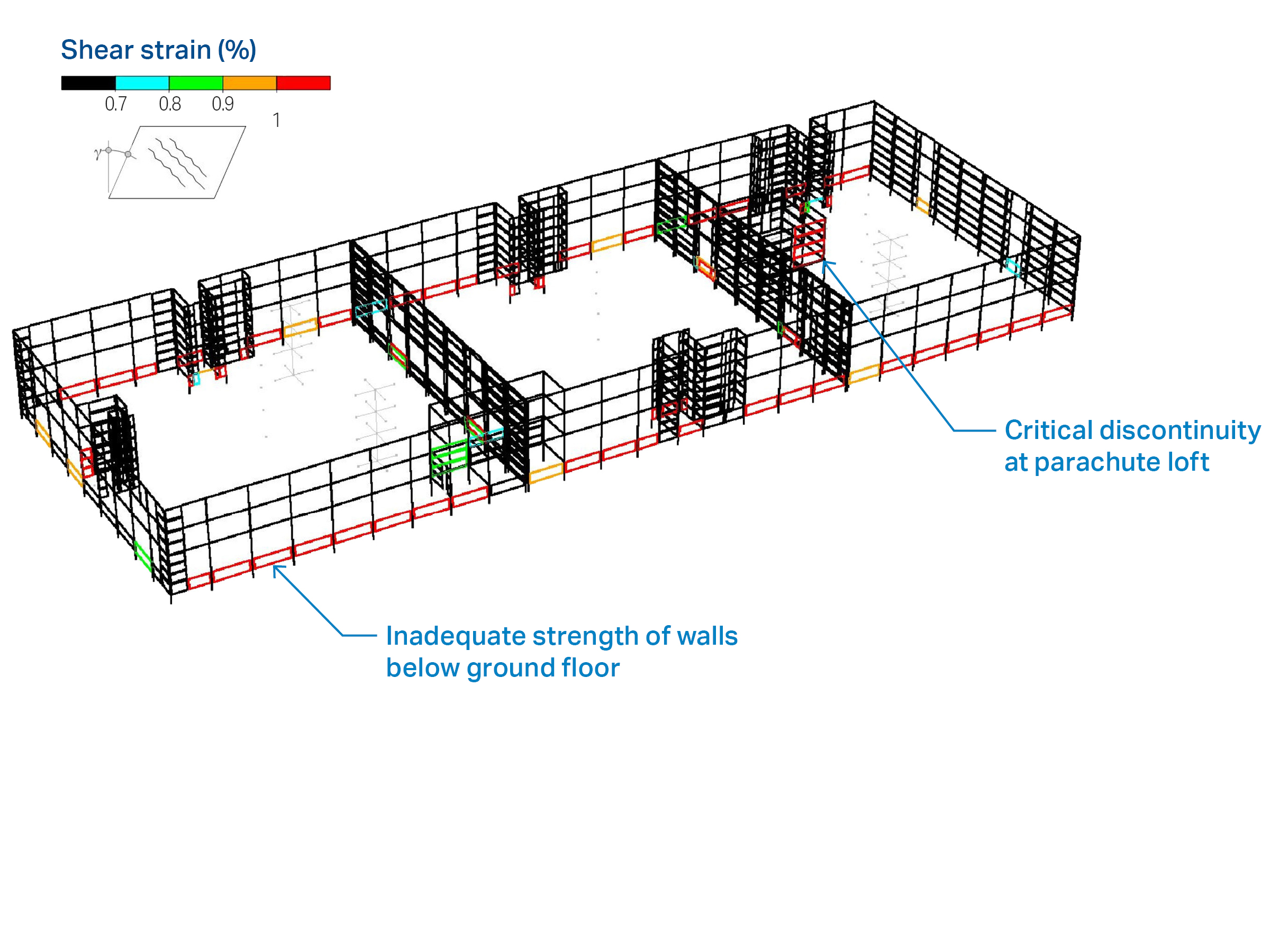
Nonlinear response-history analysis
Although the building predates modern seismic codes, the General Storehouse was unique for a concrete building of its era in that it has a prescribed lateral system with relatively ductile detailing in the concrete walls, columns, and slabs.
However, modern earthquake analysis showed that supplemental seismic strength was needed, particularly in the basement and the parachute loft, as shown in this global 3-D model of the existing nonductile concrete structure.
The parachute loft
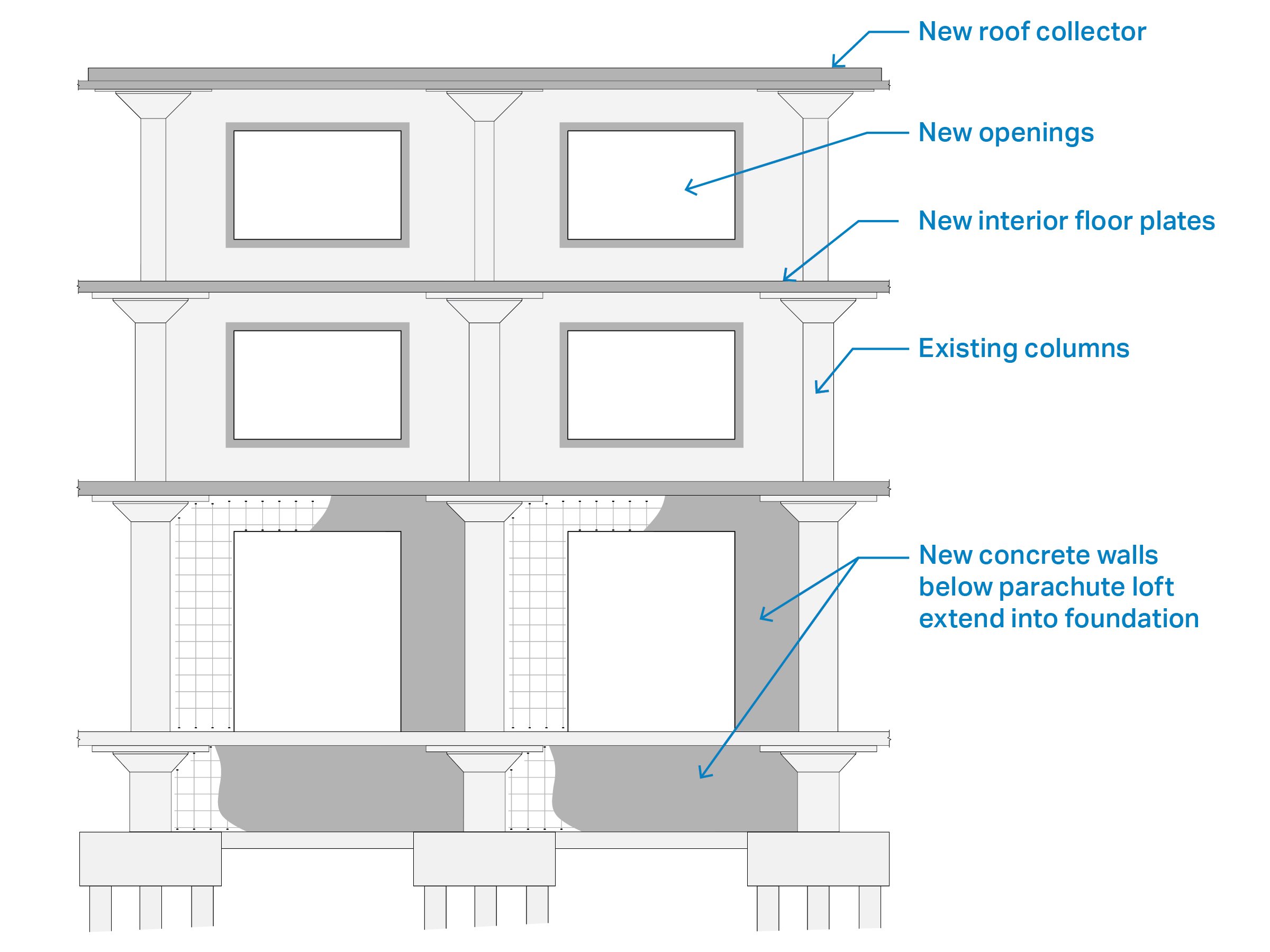
On the eastern side of the building, a 40-foot-square enclosed concrete core with 8-inch-thick walls was used to store, hang, and dry parachutes for the Navy. As originally designed, the loft formed a discontinuous seismic force-resisting element, creating the risk of concentrated earthquake damage.
With the addition of slab and roof collectors, an extension of the walls down to existing foundations, select new openings for interior access, and new interior floor plates, the parachute loft was converted into a robust and effective seismic core.
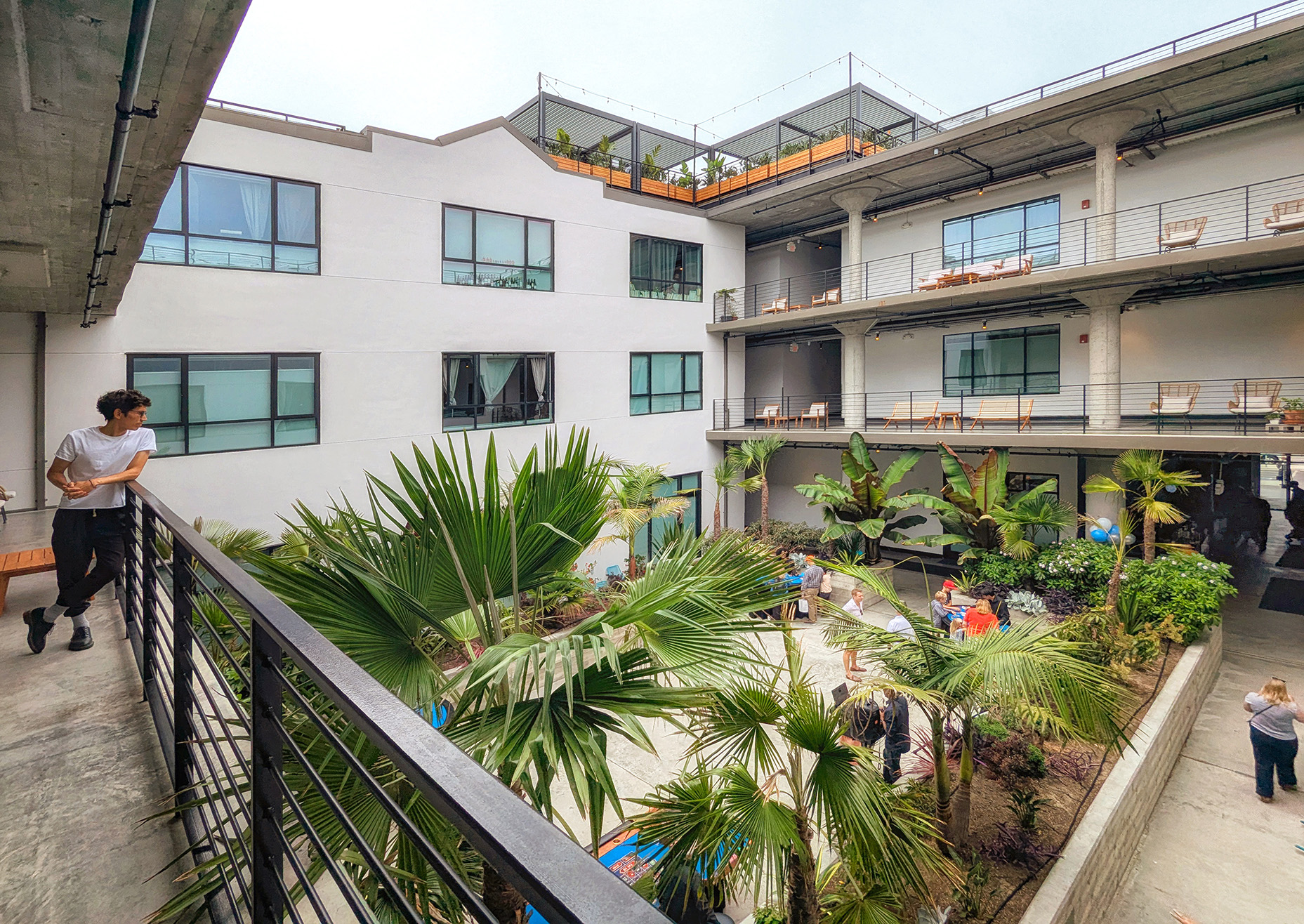
The new atria provide access and natural light to the units
Three new atria
In its original purpose as a warehouse, the lack of natural light transmitted to the interior of the 180-foot-deep floor plate was a feature. With its new purpose as a living space, three significant new atria were introduced to bring ample natural light to all 198 live-work units. The atria were strategically located at central areas of the slab—away from perimeter shear walls, where diaphragm shears were low.
The edges of the slab around the atria were configured to cantilever 6 feet beyond the nearest column lines, a distance determined to be optimal in providing space for an interior corridor loop between the atrium slab edge and the nearest column line, while not requiring structural strengthening of the slab edge.
Along with providing natural light, walkways, and a garden-like atmosphere, the atria also provide space for community events.
Green zones
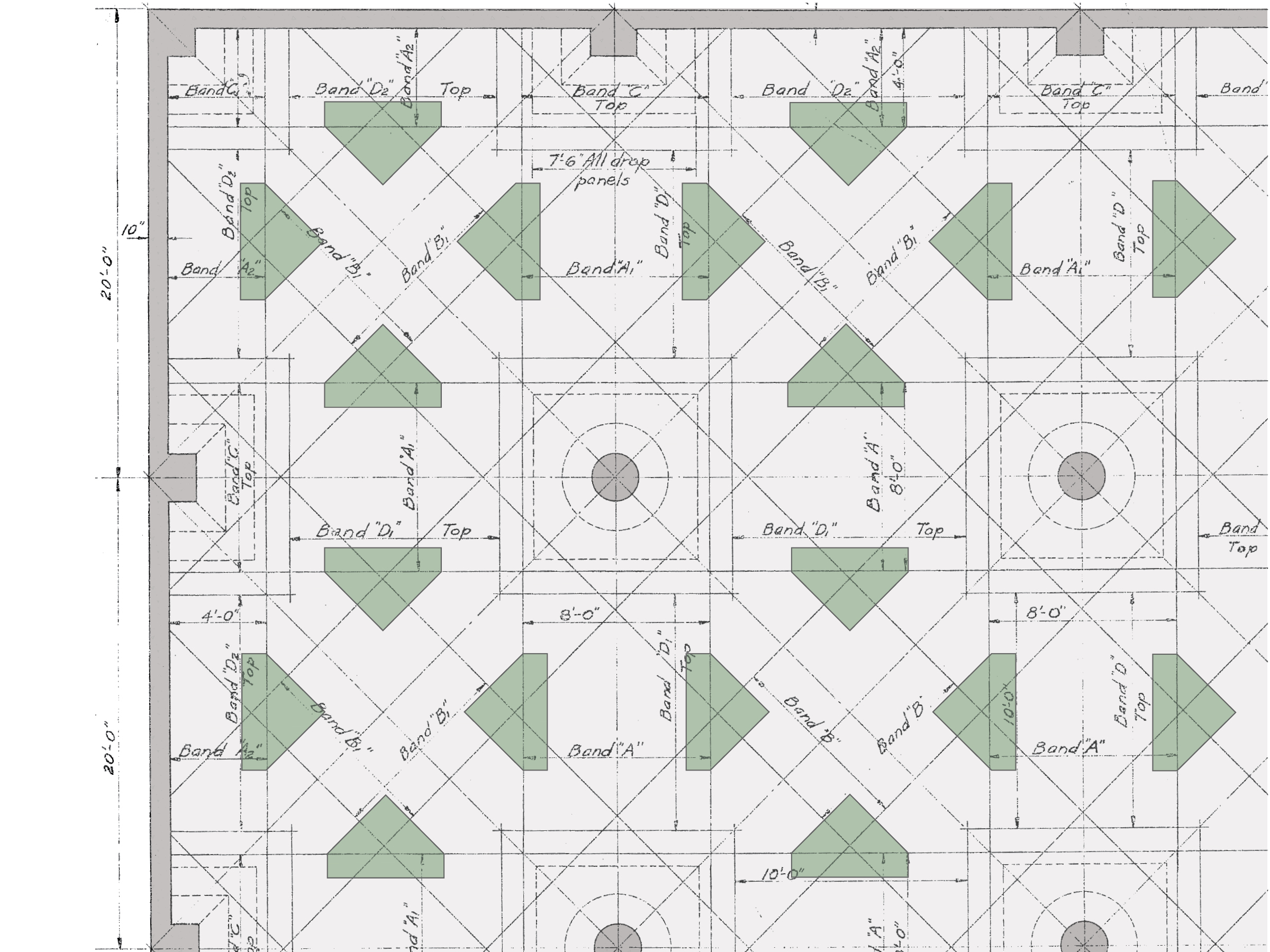
Using detailed finite-element modeling of the building’s geometry and existing reinforcing, Tipping coordinated with the design team to develop a comprehensive plan to accommodate the new slab penetrations needed for individual living units, without the need for expensive slab strengthening.
Utility shafts for air and plumbing were consolidated into “green zones”—areas identified as having non-critical reinforcing that could be cut open. With a consistent 20-by-20-foot column grid featuring four “green zones” per bay, repetitive unit types could be planned along the length of the building with consistent coring locations in non-structurally sensitive areas.
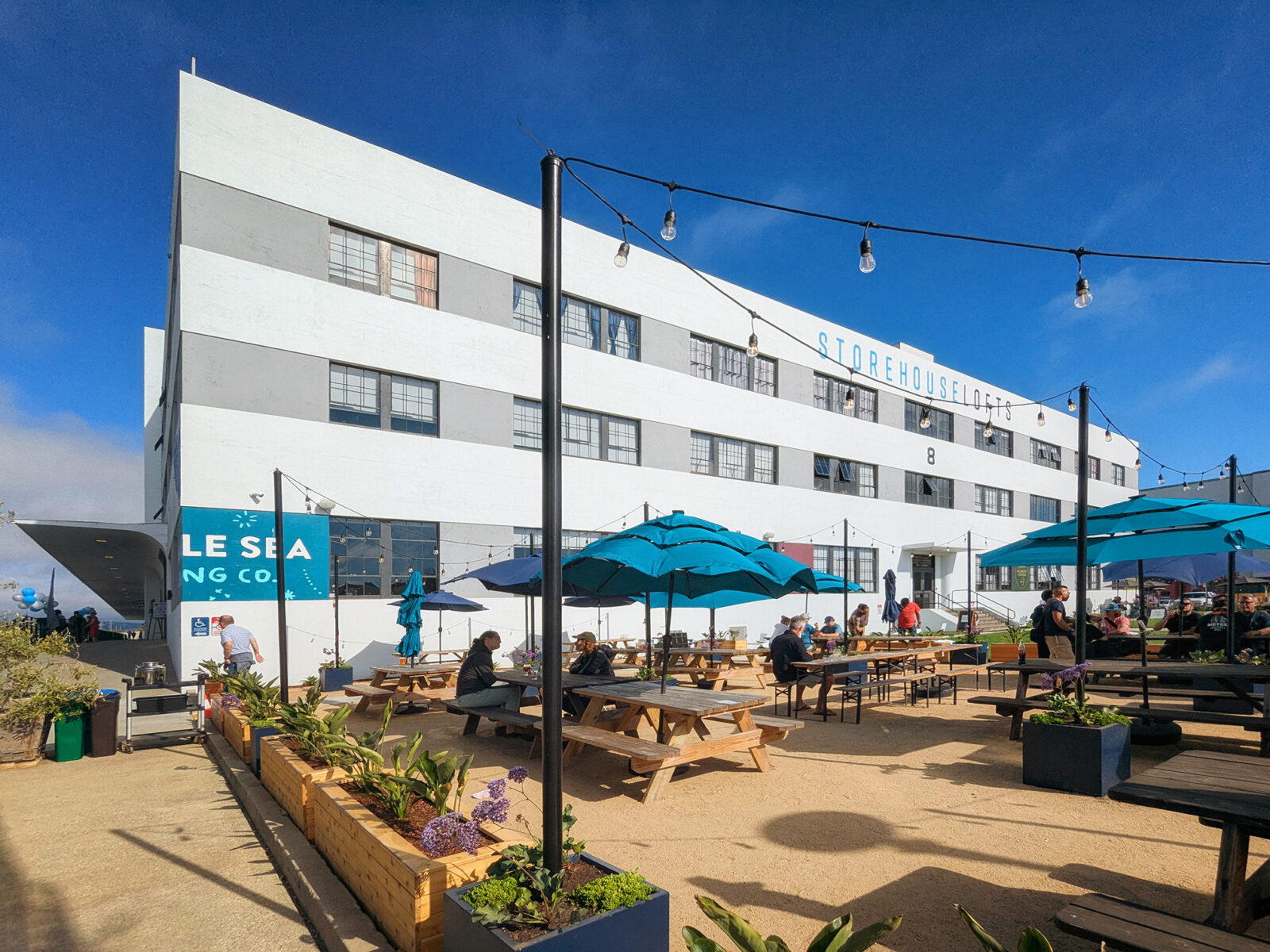
On the ground floor, Humble Sea Brewing Co.'s beer garden attracts visitors and locals alike to the newly revitalized neighborhood.
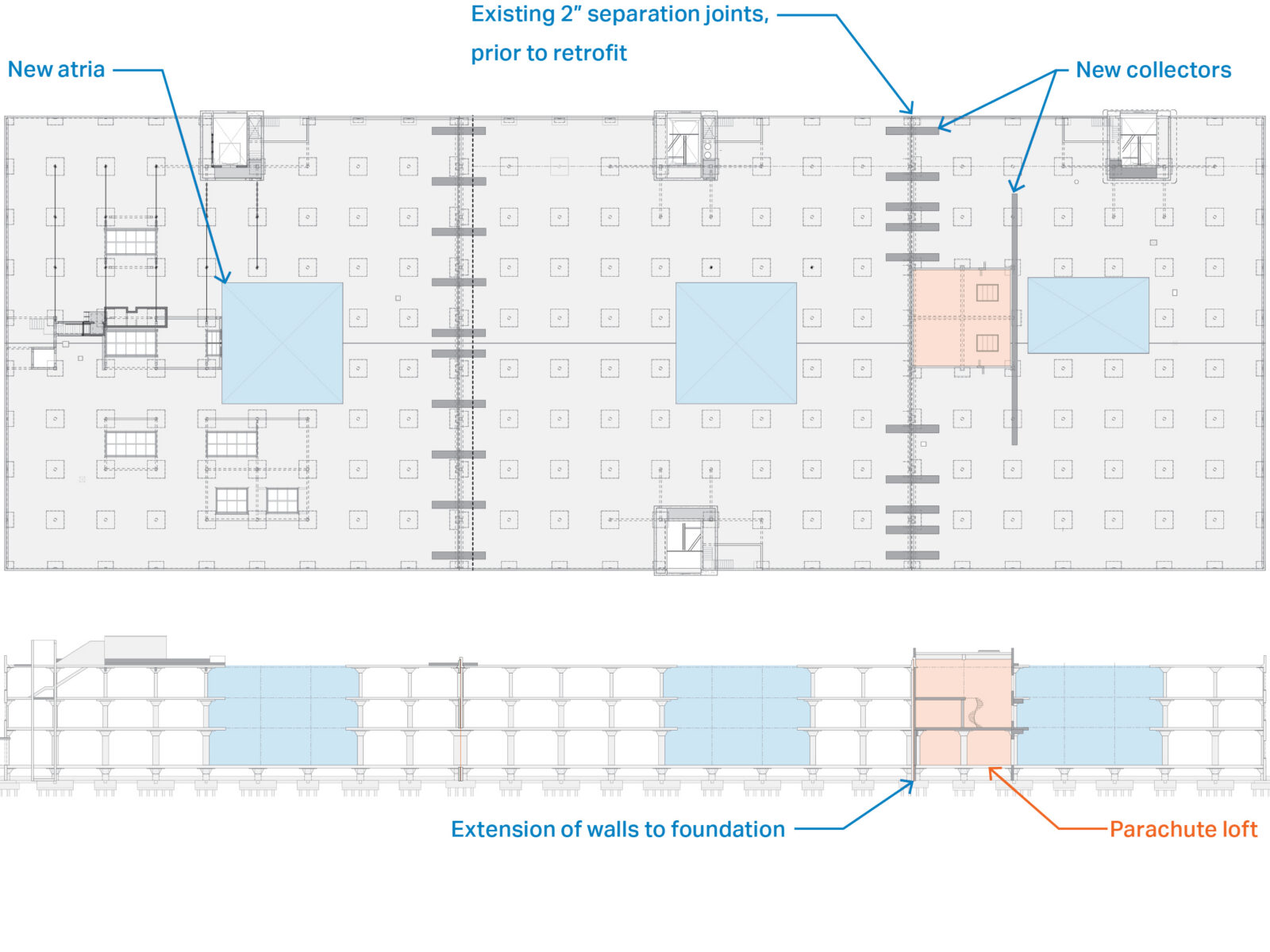
Leveraging nonlinear response history analysis to “harvest” the inherent strength of the existing frame, the team designed a surgical retrofit that achieved substantial cost savings compared to a prescriptive, highly invasive seismic approach.